A small truck crane is a hydraulic crane mounted on a pickup, a light truck or a small flatbed; in this guide it means cranes rated from roughly 0.8 t to 5 t. The smallest fit in the truck bed itself; the larger ones sit just behind the cab. It lets one person load and unload the truck without a forklift. The right one is not the biggest you can fit, but the smallest crane that lifts your heaviest load at the reach you need, on a truck that can carry the crane’s own weight.
BOB-LIFT has built truck mounted cranes since 2003 and exported them to 124 countries and regions. Our cranes are CE marked under the Machinery Directive 2006/42/EC, and production is ISO 9001 certified. This guide compares ten small truck cranes from our own range, six knuckle boom and four telescopic models from 800 kg to 5,000 kg, using the figures on their technical drawings and load charts. It shows what each one lifts at full reach, how much it weighs, how much chassis space and hydraulic power it needs, and how to match it to a pickup or a light truck.
Key takeaways
- A crane for a pickup truck bed starts at around 800 kg. Our SQ08ZA3+1 weighs 330 kg and lifts 800 kg at 1.34 m or 220 kg at 4.15 m.
- Rated capacity applies only close to the column. At full reach our 0.8 t to 5 t cranes lift between 180 kg and 1,100 kg.
- The crane’s own weight comes out of the truck’s payload: 330 kg for the 0.8 t model, 750 kg for the 2 t knuckle boom and up to 2,286 kg for the 5 t knuckle boom.
- Telescopic models reach further for their size; knuckle boom models fold upright behind the cab, keep the load bed clear and place loads more precisely.
- Check three things on the truck: payload, the length of chassis free behind the cab, and a power take-off that delivers the crane’s oil flow.
What is a small truck crane?
A small truck crane, also called a mini truck crane, a truck bed crane or a pickup truck crane, is a compact loader crane fitted to a vehicle with a modest payload. The smallest models bolt into a pickup bed and stand on their own legs. From about 1.6 t upward they are usually mounted on a light truck chassis between the cab and the load bed, with hydraulic outriggers that carry the lifting load.
Like larger cranes, they come in two boom types. A knuckle boom crane is a crane with a jointed boom that folds behind the cab. A telescopic crane is one with a single boom that extends in a line, also called a straight boom crane. Our guide to how a pickup truck crane works explains the hydraulics. This guide is about choosing one.

How much can a small truck crane lift?
A small truck crane lifts its rated load only at the shortest radius, close to the column, so once the boom is out it lifts less than the number in its name. As the hook moves out, the safe load falls, so a “2 ton” crane may handle only a few hundred kilograms at its full reach. This table puts the two numbers side by side for our small knuckle boom models.
| Model | Rated capacity | Mid reach | Full reach | Crane weight |
|---|---|---|---|---|
| SQ08ZA3+1 | 800 kg at 1.34 m | 300 kg at 3.23 m | 220 kg at 4.15 m | 330 kg |
| SQ1ZA4 | 1,600 kg at 1.39 m | 470 kg at 3.25 m | 180 kg at 4.23 m | 490 kg |
| SQ2ZA4 | 2,000 kg at 2.1 m | 1,000 kg at 4.1 m | 300 kg at 7.54 m | 750 kg |
| SQ3.2ZA3 | 3,200 kg at 2.1 m | 1,350 kg at 4.35 m | 680 kg at 7.7 m | 1,330 kg |
| SQ4ZA3 | 4,000 kg at 2.1 m | 1,750 kg at 4.35 m | 850 kg at 7.7 m | 1,350 kg |
| SQ5ZA3 | 5,000 kg at 2.1 m | 2,350 kg at 4.45 m | 1,100 kg at 8.05 m | 2,286 kg |
The telescopic models trade fine control for reach. Their load charts are given at boom angles from 0° to 75°; at a flat boom and full extension they lift:
| Model | Rated capacity | Full reach (boom flat) | Crane weight |
|---|---|---|---|
| SQ2SA3 | 2,000 kg at 2.0 m | 250 kg at 8.2 m | 950 kg |
| SQ3.2SA3 | 3,200 kg at 2.25 m | 550 kg at 8.3 m | 1,280 kg |
| SQ4SA4 | 4,000 kg at 2.5 m | 400 kg at 9.4 m | 1,780 kg |
| SQ5SA3 | 5,000 kg at 1.91 m | 1,100 kg at 8.68 m | 2,100 kg |
Note that a bigger rating does not always mean more at full reach: the 1.6 t SQ1ZA4 is built for heavier loads close in, and near full reach the 800 kg SQ08ZA3+1 lifts slightly more (220 kg at 4.15 m against 180 kg at 4.23 m). So size the crane from the heaviest load at the furthest point you need to reach, not from the rating. If you regularly set 500 kg pallets 4 m from the column, a 0.8 t or 1.6 t crane is too small even though the pallet weighs less than the rating; a 2 t knuckle boom, with 1,000 kg at 4.1 m, does the job with margin. Our guide on how to read a crane load chart walks through this step by step.
What size crane for a truck bed or pickup?
For most pickups, the right small crane for a pickup truck is an 800 kg class crane. Our 800 kg pickup crane with outriggers, the SQ08ZA3+1, weighs 330 kg, reaches 4.15 m and slews 330°. It stands on four folding legs that spread to 2,430 mm, so the lifting load goes to the ground instead of the pickup’s springs. There is also an 800 kg pickup crane without outriggers for lighter, occasional lifts.
Check the pickup’s rated payload first. The crane’s 330 kg comes out of it, and so does anything you carry in the bed. As an example, a pickup rated for 1,000 kg of payload keeps about 670 kg for goods, less the mounting hardware. The crane needs 8 L/min of oil at 18 MPa from the truck’s power take-off, and its drawing recommends 3.5 kW of drive power. Send us your vehicle’s PTO data and we confirm the match when we quote.
Above 800 kg the crane’s weight and the forces it puts into the chassis grow quickly. The 1.6 t SQ1ZA4 weighs 490 kg and the 2 t models 750 to 950 kg, which, together with a useful load, is more than many pickups are rated to carry. From this size, choose a light truck with a proper chassis frame.
What does a 1.6 t to 5 t crane need from the truck?
Three numbers on the crane’s drawing decide which truck works: the crane’s weight, the installation space it takes on the chassis, and the hydraulic power its pump needs from the truck’s power take-off (PTO).
| Model | Crane weight | Installation space | Oil flow and pressure | Recommended power |
|---|---|---|---|---|
| SQ1ZA4 (1.6 t knuckle) | 490 kg | 550 mm | 15 L/min, 18 MPa | 7.5 kW |
| SQ2ZA4 (2 t knuckle) | 750 kg | 680 mm | 20 L/min, 20 MPa | 9 kW |
| SQ2SA3 (2 t telescopic) | 950 kg | 650 mm | 20 L/min, 16 MPa | 8 kW |
| SQ3.2ZA3 (3.2 t knuckle) | 1,330 kg | 850 mm | 25 L/min, 25 MPa | 14 kW |
| SQ3.2SA3 (3.2 t telescopic) | 1,280 kg | 750 mm | 25 L/min, 20 MPa | 14 kW |
| SQ4ZA3 (4 t knuckle) | 1,350 kg | 850 mm | 25 L/min, 26 MPa | 14 kW |
| SQ4SA4 (4 t telescopic) | 1,780 kg | 800 mm | 25 L/min, 20 MPa | 16 kW |
| SQ5ZA3 (5 t knuckle) | 2,286 kg | 1,050 mm | 35 L/min, 28 MPa | 22 kW |
| SQ5SA3 (5 t telescopic) | 2,100 kg | 1,050 mm | 32 L/min, 20 MPa | 18 kW |
Work through them in this order:
- Payload. The truck’s payload must cover the crane’s weight, the mounting subframe and the goods you carry.
- Chassis space. The chassis must have the installation space free behind the cab, plus room for the load bed you need.
- PTO. The power take-off must deliver the oil flow at the engine speed you will work at.
- Front axle. A crane behind the cab puts most of its weight on the front axle, so your body builder should run an axle-load calculation.
- Outrigger room. The outriggers also need room to extend on site: the 2 t knuckle boom’s outriggers span 1,842 to 3,500 mm and the 5 t knuckle boom’s 2,272 to 5,122 mm.
Mounting is a job for a qualified body builder, who checks the chassis frame and fits a subframe. Our truck mounted crane installation guide covers the chassis checks, the subframe and the PTO in detail.

Knuckle boom or telescopic: which small crane is better?
For most small trucks the choice comes down to reach against control. The numbers from our drawings show the trade-off at 2 t:
- Reach. The 2 t telescopic SQ2SA3 reaches 8.2 m; the 2 t knuckle boom SQ2ZA4 reaches 7.54 m.
- Load at reach. The knuckle boom lifts 1,000 kg at 4.1 m; the telescopic lifts 700 kg at 4.93 m (6 m boom at 30°, from its load chart). The two radii differ, so compare both at your own working radius.
- Weight. The knuckle boom weighs 750 kg, the telescopic 950 kg.
- Placing. The knuckle boom can bend over a wall or into a bed and set the load down precisely; the telescopic lifts from the boom tip in a straight line.
- Slewing. The SQ2ZA4 slews 370° and the SQ2SA3 360°.
Choose a knuckle boom when you load and unload the truck itself, deliver over obstacles or want the folded crane to leave the load bed clear. Chassis space is similar either way: on our drawings the knuckle models take the same or slightly more length behind the cab than the telescopic model of the same capacity. Choose a telescopic when you mostly lift at long reach, need a winch and hook height, or want a simpler machine. Our comparison of knuckle boom vs telescopic boom truck cranes covers the differences in full.
What are small truck cranes used for?
They suit work where loads are frequent but not heavy, and where a separate crane or forklift is not on hand:
- Farms and estates: feed bags, fence posts, water tanks and small machinery.
- Builders’ merchants and small contractors: pallets of blocks, cement and tiles delivered to site.
- Utilities and maintenance crews: pumps, valves, cable drums and manhole covers.
- Workshops and tyre services: engines, gearboxes and truck tyres.
- Landscaping: stone, trees in root balls and garden machinery.
Example scenario (an illustration, not a customer record): a farm wants to lift 400 kg water tanks off the bed of a light truck and set them about 3 m from the crane column. The SQ08ZA3+1, an 800 kg class crane, lifts 300 kg at a 3.23 m radius, so it is too small. The 1.6 t SQ1ZA4 lifts 470 kg at a 3.25 m radius and just covers the job if the radius stays under 3.25 m, while the 2 t SQ2ZA4, with 1,000 kg at a 4.1 m radius, leaves a comfortable margin and room to reach further.
From our project records: 3.2 t truck cranes have gone to Chile, 4 t truck cranes to Colombia and 5 t truck cranes to Russia, and our 5 t telescopic crane is working for customers in Botswana.
For more weight or reach than this range offers, our boom truck sizes guide covers the larger classes.
How do you choose the right small truck crane?
- Write down the heaviest regular load and the furthest reach at which you need to lift it, from the crane’s centre to where the load is picked up or set down.
- Find the models that lift that load at that radius on their load chart, with some margin.
- Pick the boom type: knuckle boom for loading the truck and placing over obstacles, telescopic for long reach.
- Check the truck: payload for the crane weight, chassis space behind the cab, and PTO oil flow.
- Check the site and the rules: room for the outrigger spread, firm ground under each leg, and the operator training and inspections your local rules require.
- Ask for the drawing and load chart of the final choice and confirm the options, such as a winch or remote control.
Check which rules apply where you work, such as OSHA 29 CFR 1926 Subpart CC in the US, LOLER in the UK, ASME B30.22 for articulating boom cranes, or the loader crane standard EN 12999 in Europe.
Frequently asked questions
What is the smallest truck crane?
In our range it is the SQ08ZA3+1, an 800 kg knuckle crane for pickup truck beds. It weighs 330 kg and reaches 4.15 m, where it lifts 220 kg.
Can you put a crane on a pickup truck?
Yes. The usual crane for a pickup truck bed is an 800 kg class crane. Make sure the pickup’s payload covers the crane’s 330 kg plus the load you carry, and use the outriggers so lifts are not taken on the pickup’s suspension.
How much does a small truck crane weigh?
On our drawings, from 330 kg for the 800 kg model to 2,286 kg for the 5 t knuckle boom. The 2 t models weigh 750 kg (knuckle) and 950 kg (telescopic).
How far can a small truck crane reach?
Our 0.8 t and 1.6 t knuckle cranes reach about 4.2 m. The 2 t to 5 t knuckle booms reach 7.5 to 8.05 m, and the telescopic models 8.2 to 9.4 m. The load at full reach is a fraction of the rating, so read the load chart.
Does a small truck crane need outriggers?
For anything beyond light, occasional lifts, yes. Outriggers carry the lifting load to the ground and stop the truck tipping. All our models from 1.6 t up have outriggers, and the 800 kg pickup crane comes with or without them.
How is a small truck crane powered?
By a hydraulic pump, usually driven by the truck’s power take-off. Our drawings give the oil flow, pressure and power each model needs, from 8 L/min and 3.5 kW for the 800 kg crane to 35 L/min and 22 kW for the 5 t knuckle boom.
How we compiled this guide
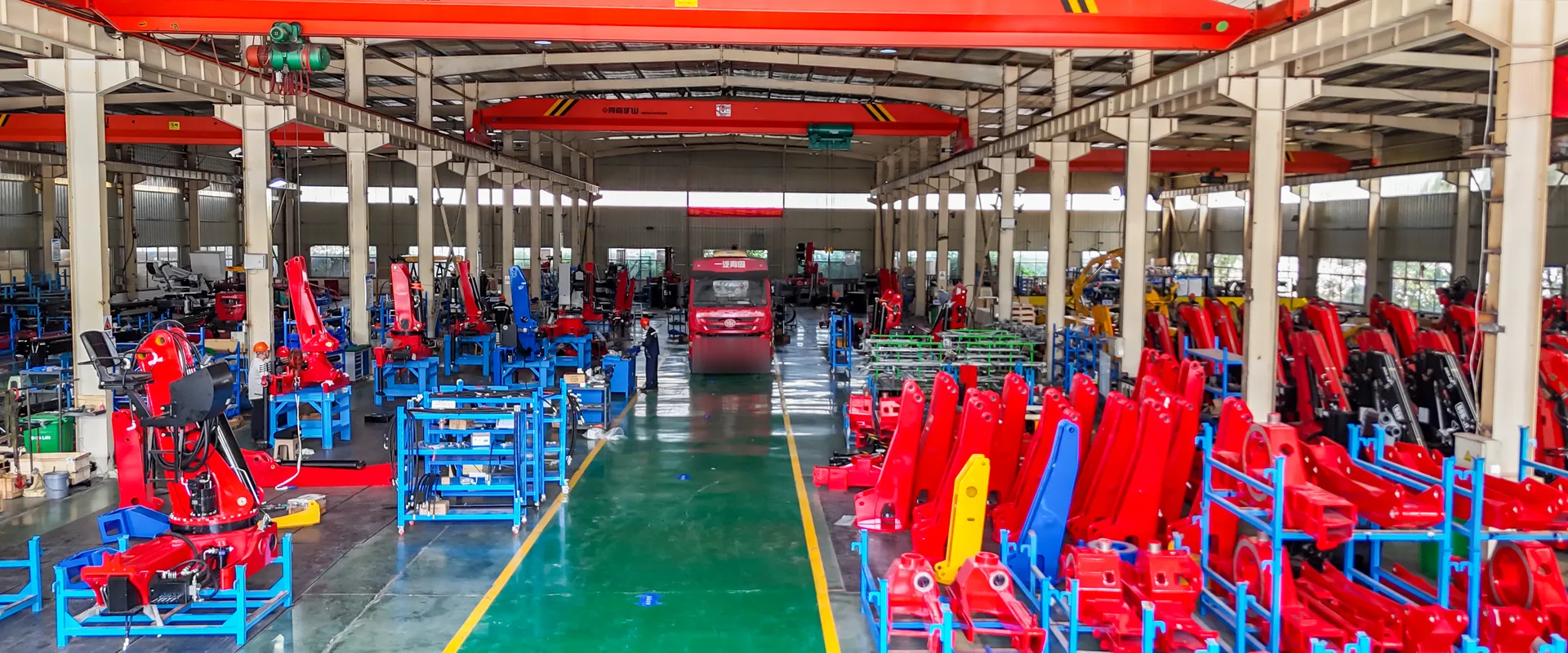
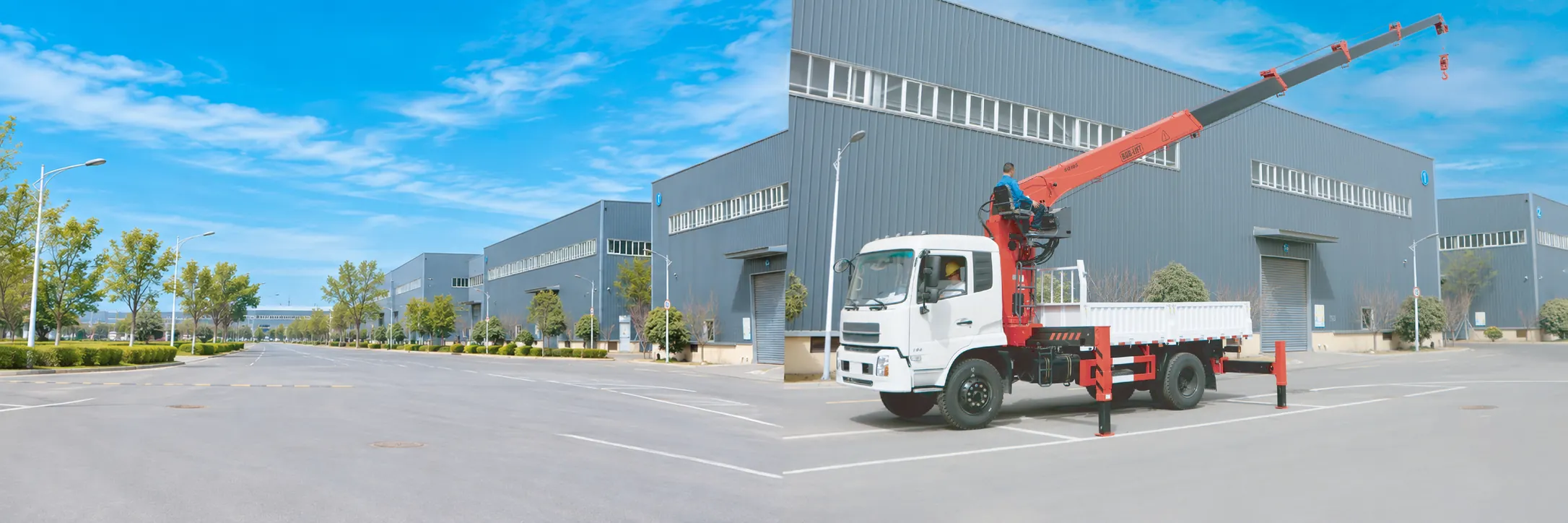
Every figure comes from the BOB-LIFT technical-department dimension drawings and load charts of the SQ08ZA3+1, SQ1ZA4, SQ2ZA4, SQ3.2ZA3, SQ4ZA3, SQ5ZA3, SQ2SA3, SQ3.2SA3, SQ4SA4 and SQ5SA3, compiled in October 2026. The photos show real cranes at our factory. The figures were reviewed by Achord Chan, Product Operations Director, against the current drawings in October 2026. Specifications can change without notice, so ask for the current drawing before you order.
Find the right small truck crane
Tell us your heaviest load, how far you need to reach and the truck or pickup you plan to use, and we will suggest models with the drawing and load chart for each. You can read more about us and our factory on the About us page. Browse our pickup cranes, knuckle boom truck cranes and telescopic boom truck cranes, or contact us to start.