
A used truck mounted crane is a crane that has already worked for another owner, usually on another truck. It costs less to buy than a new one, but the purchase price is only part of what it costs you. Before a used crane can work you may need an independent inspection, repairs, a remount onto your own truck, a load test and new paperwork. You also take the risk that parts, the load chart or the manual for that crane are hard to get. A used crane makes sense when its history is known and it fits your truck as it is. A new crane makes sense when you need a specific size, a warranty and parts support, or when the crane will work every day.
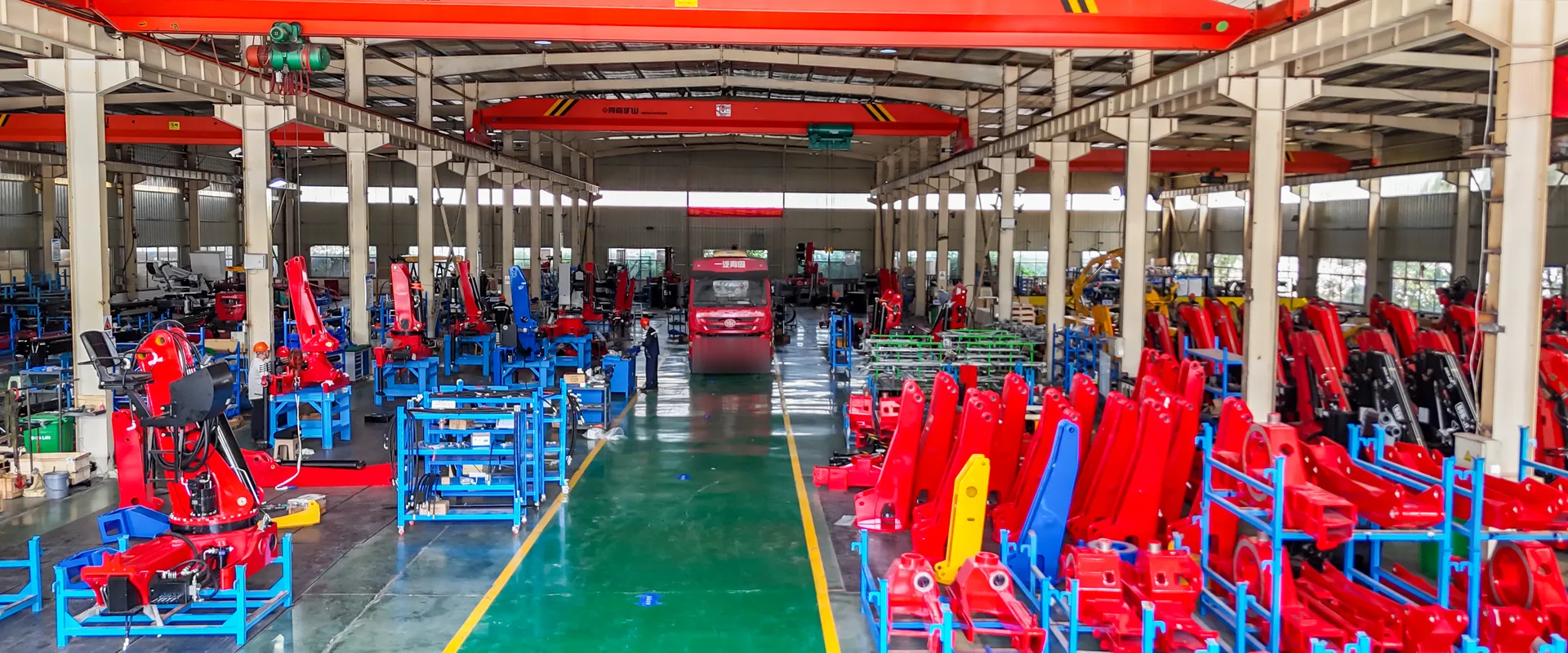
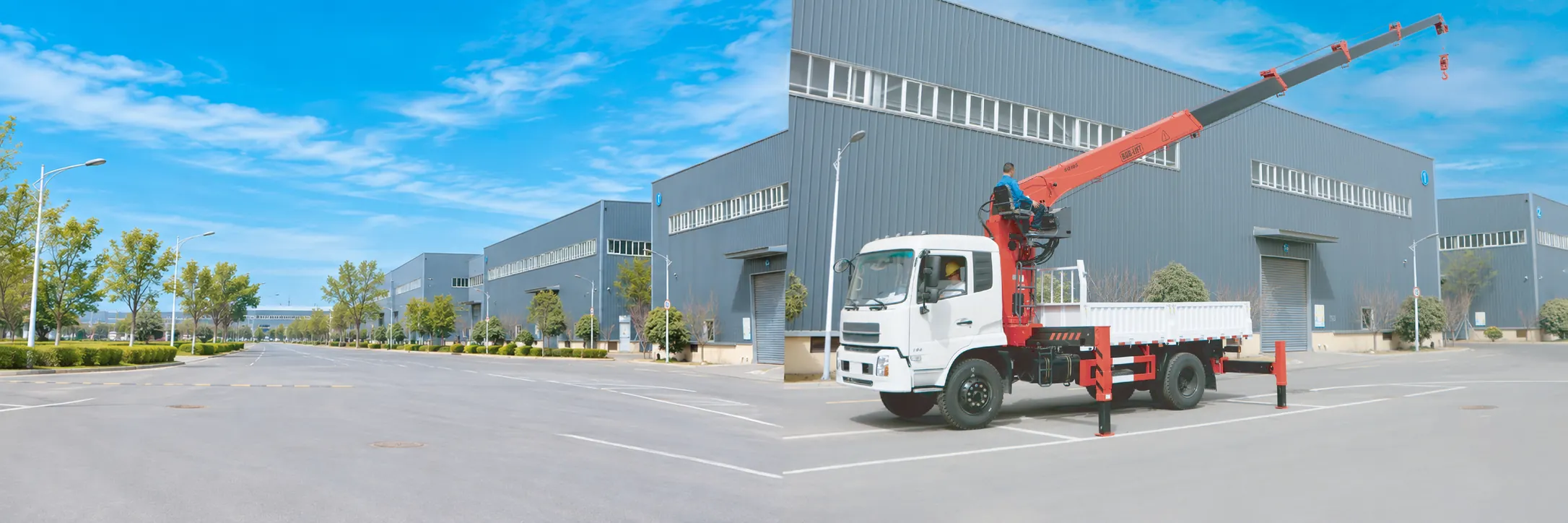
BOB-LIFT has built truck mounted cranes in Xuzhou, China, since 2003. We build new cranes, so read this guide knowing where we stand. It sets out what a used crane can hide, how to inspect one before you pay and what moving a crane to another truck involves. It then shows what a new crane comes with from a factory, using our own service terms and the figures on our technical drawings. We do not publish prices; the comparison is about cost items and risks, not sticker prices.
Please note: BOB-LIFT does not sell used cranes. Every crane we supply is new, from our factory in Xuzhou.
Key takeaways
- Compare the total cost to put the crane to work, not the price: inspection, repairs, remounting, load test, certification, transport and downtime.
- The condition of a used crane shows in its structure, slewing ring, cylinders and hydraulic system, and in its inspection records, more than in its age.
- A crane bought off another truck must be remounted. Your truck’s power take-off, pump, subframe and axle loads must suit it.
- Without the exact load chart and manual for the crane, it cannot be operated within its rating. Get them before you buy.
- A new crane from us comes with its drawing and load chart, a 12-month whole-crane warranty, common parts dispatched within 48 hours and a reply from our service team within 12 hours.
Used vs new truck mounted crane at a glance
| Question | Used crane | New crane from a factory |
|---|---|---|
| Purchase price | Lower | Higher |
| Condition | Depends on past work and maintenance; must be inspected | Known; built and tested to the current drawing |
| Size and reach | Whatever is for sale | Chosen for your loads, reach and truck |
| Load chart and manual | May be missing or for a different version | Supplied for the exact model |
| Fitting to your truck | Often needs a remount and hydraulic changes | Specified for your chassis, installed by you or your body builder |
| Warranty | Usually none, or a short dealer warranty | 12 months on the whole crane (BOB-LIFT) |
| Parts | Depends on the make still being supported | Common parts dispatched within 48 hours (BOB-LIFT) |
| Lead time | Immediate if it is in your country | Production and shipping time, confirmed with the quote |
The real cost of a used crane
A used crane is cheap only if it is ready to lift. Add up these items before you compare it with a new one:
- Independent inspection. Pay a crane inspector, not the seller, to examine it before you commit. The cost is small next to a cracked boom found after purchase.
- Repairs and wear parts. Common items include hoses, seals, slewing-ring bolts, pins and bushes, outrigger cylinders and the control valve. Budget for the faults the inspection finds, such as a weeping cylinder seal or a worn slewing gear.
- Remounting. If the crane comes off another truck, it needs a subframe that suits your chassis, a power take-off (PTO) and pump that deliver its oil flow and pressure, and a check of axle loads. See the section on remounting below.
- Load test and certification. Most jurisdictions require a thorough examination or annual inspection; after a remount or major repair, a load test is normally part of it.
- Documents. The exact load chart, operating manual and parts list for that model and serial number. If they are missing, getting them may cost time, or may not be possible at all.
- Transport and import. Shipping, and in some countries extra inspection or restrictions on importing used machinery. Check the rules with your customs broker before you buy, not after.
- Downtime. Days off work while parts arrive, especially for an older or less common make.
Many of these costs do not apply to a used crane that is still on a truck in good order, with records, in your own country. They all apply to a crane of unknown history imported on its own.
How to inspect a used truck crane before you buy
Inspect a used crane the way a periodic inspection would, then add the questions only a buyer asks. Our truck mounted crane inspection checklist lists the daily, monthly and annual checks in full; for a purchase, focus on these:
- Structure. Look for cracks, re-welds, heat marks and bent sections on the column, booms, extensions and base, especially around pins and cylinder mounts. Fresh paint over a single area deserves a closer look.
- Slewing ring and gearing. Check for play and noise as the crane slews, loose or missing bolts, and wear on the slewing gear or rack.
- Cylinders. Look for scored rods, leaks at the seals, and drift: raise a load, stop, and watch whether the boom or outrigger slowly sinks. Drift points to worn seals or a faulty holding valve.
- Hydraulic system. Check hoses for cracks and chafing, fittings for leaks, and the oil for colour and contamination. Ask when the oil and filters were last changed.
- Outriggers. Extend and retract every beam and leg; check the feet, the beam wear pads and that the legs hold under load.
- Controls and safety devices. Every lever should return to neutral and every function should move smoothly. Check the overload protection, the emergency stop and any limit switches actually work.
- Identity and records. Match the serial plate to the documents, and ask for the inspection and repair history, the load chart and the manual.
A thorough examination is a detailed, documented inspection by an independent competent person, covering structural integrity, hydraulic components, safety devices and operational performance. Request the most recent examination report, verify that its identification details correspond to the crane offered, and confirm that any defects it recorded were subsequently rectified. Then ask to see the crane lift. A test with a known weight at a stated radius, within the load chart, shows more than any photo. Inspection rules give you a benchmark for what a well-kept crane should have on file. In the US, the construction-crane rule requires an annual comprehensive inspection by a qualified person and documented monthly checks [1]. In Great Britain, LOLER requires a thorough examination of lifting equipment at least every 12 months, or every 6 months for equipment that lifts people and for lifting accessories, and before first use after installation [2]. Articulating cranes in the US are covered by ASME B30.22, which sets inspection and testing practice for this type of crane [3]. A seller who cannot show any inspection record is telling you something.

Moving a used crane to your truck
Remounting means removing a crane from one vehicle and installing it on another, including a new subframe, hydraulic connections and controls. Many used cranes are sold without the truck, or the buyer wants the crane on a different chassis. A truck mounted crane is designed around three things the truck must supply: space on the chassis, hydraulic power, and the ability to carry the crane’s weight and lifting forces. Every BOB-LIFT dimension drawing states them. Two examples from our drawings:
| Requirement | 5 t knuckle boom SQ5ZA3 | 10 t knuckle boom SQ10ZA6 |
|---|---|---|
| Crane weight | 2,286 kg | 3,700 kg |
| Recommended power | 22 kW | 30 kW |
| Hydraulic flow | 35 L/min | 40 L/min |
| System pressure | 28 MPa | 30 MPa |
| Maximum lifting moment | 10.5 t·m | 21 t·m |
| Outrigger span | 2,272–5,122 mm | 2,310–5,610 mm |
Ask the same of any used crane. For example, a used 10 t knuckle boom similar to the SQ10ZA6 needs a pump that delivers about 40 L/min at 30 MPa; a pump sized for a 5 t crane at 35 L/min would run every movement slower than designed, and a pump that cannot reach 30 MPa would stop it short of its rated loads. Does your PTO and pump give its flow at its working pressure? Does your chassis have the mounting length and frame strength for its lifting moment? Will the axles stay within their ratings with the crane and your load on board? A crane moved to a truck that is too light, or run on a pump that is too small or too large, will not perform to its load chart and may not be safe. Our truck mounted crane installation guide explains the subframe, PTO and axle-load checks step by step. After any remount, the crane needs testing and examination before use.
What comes with a new crane from the factory
The case for a new crane is mostly the support behind it. These are the terms our service team works to, as of October 2026:
- Warranty: 12 months on the whole crane, with no shorter period for structural or hydraulic parts.
- Parts: common spare parts are dispatched within 48 hours.
- Service: a reply within 12 hours, and video guidance for troubleshooting. Our engineers can travel abroad for on-site work at the customer’s cost.
- Documents: the dimension drawing and load chart for the exact model, and an operating manual in English as standard; other languages can be prepared if you ask in advance.
- Training: there is no operator training at delivery, but your technicians are welcome to train at our factory.
- Fit: you choose the capacity, boom type and reach for your loads and truck, rather than adapting to what is for sale. Our guide to choosing crane tonnage walks through the sizing.
Our cranes are CE marked under the Machinery Directive 2006/42/EC and built in an ISO 9001 certified factory. The film below shows a load test of an SQ8ZA6+1 knuckle boom crane at our Xuzhou factory in October 2026: the booms unfold, the extensions run out toward full reach, and the crane lifts test weights.
When a used crane is the right choice, and when a new one is
| Your situation | Better choice | Why |
|---|---|---|
| Occasional lifts, low budget, crane available locally on a truck with records | Used | Few hidden costs; history can be checked |
| Same make and model as cranes already in your fleet | Used can work | Parts, skills and documents are already in place |
| Daily work, your income depends on the crane | New | Warranty, known condition and parts support reduce downtime |
| You need a specific capacity, reach or boom type | New | The used market rarely offers the exact match |
| Crane must fit a truck you already own | New | Specified for your chassis, PTO and axle loads |
| Imported used crane, unknown make, no papers | Avoid | Highest risk on safety, parts and import rules |
One more option sits between the two: a new crane of a simpler or smaller specification. If the budget points you toward a used crane, compare it with a new crane that covers your heaviest lift at your working radius and nothing more. Our guide to reading a crane load chart shows how to check that figure for any crane, new or used.
Frequently asked questions
Is it worth buying a used knuckle boom crane?
It can be, if an independent inspection finds it sound, it comes with its load chart, manual and inspection records, and it fits your truck without major changes. Otherwise the repair, remounting and downtime costs can close the price gap with a new crane.
What should I check on a used truck crane?
Cracks and re-welds on the structure, play in the slewing ring, cylinder leaks and drift, hose and oil condition, outrigger function, controls and overload protection, and whether the serial plate matches the documents. Then watch it lift a known load.
Can a crane be moved from one truck to another?
Yes, if the new truck has the mounting space, frame strength and axle capacity, and its PTO and pump deliver the crane’s oil flow at its working pressure. The crane must be tested and examined after the remount.
How long does a truck mounted crane last?
There is no fixed figure. It depends on how many lifts it makes, how close to its rating it works, and how well it is maintained. Inspection records and the condition of the structure, slewing ring and cylinders tell you more than the year it was built.
What warranty does a new BOB-LIFT crane have?
12 months on the whole crane. Common spare parts are dispatched within 48 hours, and our service team replies within 12 hours.
How we compiled this guide
The crane requirements come from the BOB-LIFT technical-department dimension drawings of the SQ5ZA3 and SQ10ZA6. Warranty, parts, service, documents and training terms were confirmed by our service team in October 2026. Inspection rules are summarised from the cited US and UK sources; check the rules that apply where you work. The photo and the film were taken at our factory in Xuzhou. Reviewed by Achord Chan, Product Operations Director, in October 2026.
Compare a new crane with the used one you are looking at
Send us the details of the used crane you are considering: make, model, capacity and reach, and the truck you plan to use. We will suggest the new BOB-LIFT model that matches it, with its drawing, load chart and quote, so you can compare like for like. Browse our knuckle boom truck cranes and telescopic boom truck cranes, or contact us to start.