
A crane lorry is a goods lorry with a hydraulic crane fitted behind the cab, so one vehicle carries the load and lifts it on and off at the site. The same machine is called a truck mounted crane or crane truck in North America, and a lorry loader or lorry mounted crane in the UK and much of Asia and Africa. Choose one by what the crane lifts at your working distance, then check that the lorry can carry the crane and still take a useful load.
This guide explains the two crane types used on lorries, the sizes that suit light, medium and heavy lorries, and how to match the crane to the chassis. It also summarises the inspection rules in the UK and Singapore, two markets where the term crane lorry is standard. For this guide we compiled the technical drawings and load charts of nine of our current truck mounted cranes, from 2 t to 25 t, and every crane figure below is taken from them. Achord Chan, Product Operations Director at BOB-LIFT, prepared it with our installation team.
Key takeaways
- A crane lorry is sized by the load at the working distance you need, not by the crane’s headline tonnage; our 10 t knuckle boom crane lifts 1,150 kg at its full 14.68 m reach.
- Knuckle boom cranes fold compactly behind the cab, whereas telescopic cranes give a long, straight reach at a similar weight in the same class.
- The crane’s own weight comes out of the lorry’s payload: from 950 kg for a 2 t telescopic crane to 7,300 kg for a 20 t telescopic crane on our drawings.
- The crane needs 650 to 1,400 mm of installation space behind the cab and a power take-off that delivers its rated oil flow and pressure.
- In the UK, a crane lorry needs a thorough examination at least every 12 months; in Singapore, an Authorised Examiner inspects it every 12 months.
What is a crane lorry?
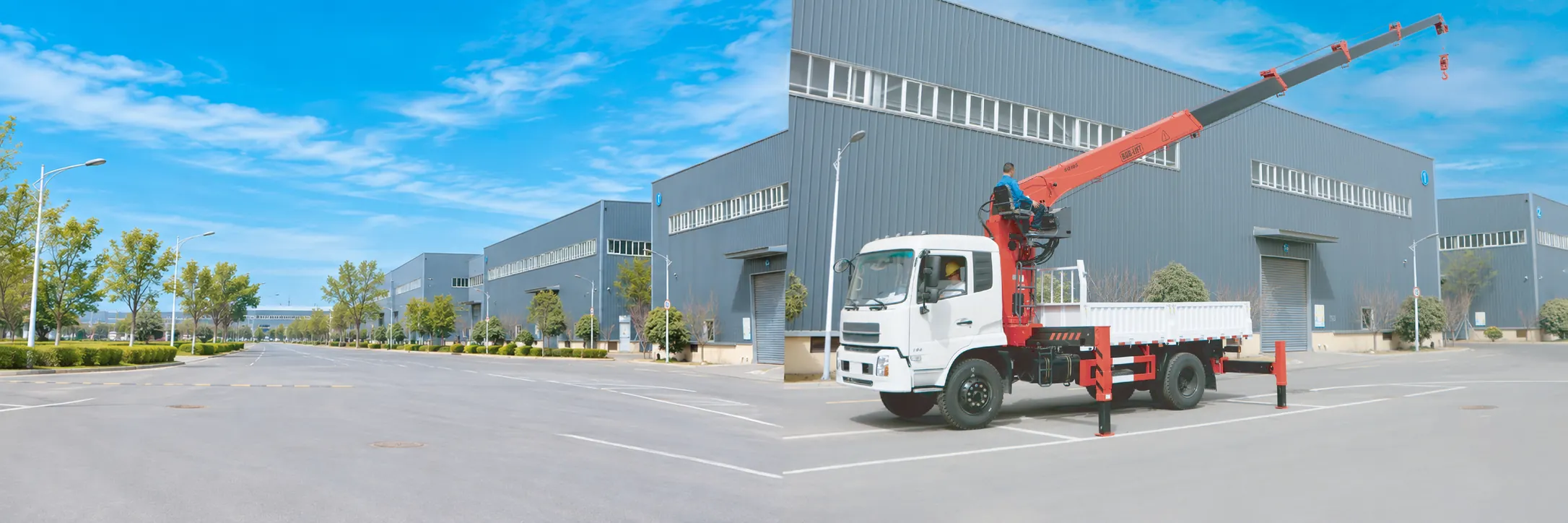
A crane lorry is a rigid goods lorry with a hydraulic loader crane mounted on its chassis, usually between the cab and the cargo body. The crane takes its power from the lorry’s engine through a power take-off and a hydraulic pump. Stabiliser legs, called outriggers, extend from the crane base to keep the lorry steady while it lifts. When the job is done, the crane folds or retracts, and the lorry drives away with its load.
The names vary by market, which makes searching for one confusing. The table sets out the common terms and one machine that is often mixed up with them.
| Term | Where it is used | What it means |
|---|---|---|
| Crane lorry, lorry crane | UK, Singapore, Malaysia, Hong Kong, much of Africa | A goods lorry with a loader crane, usually behind the cab |
| Lorry loader, lorry mounted crane | UK and Europe | The crane itself, often a knuckle boom |
| Truck mounted crane, crane truck | North America, Middle East, international trade | The same machine as a crane lorry |
| Boom truck | North America | Usually a crane truck with a telescopic boom |
| Mobile crane, truck crane | Worldwide | A crane on its own carrier with no cargo body; a different machine |
BOB-LIFT builds the crane that goes on the lorry: knuckle boom and telescopic loader cranes from 800 kg to 50 t. We do not build mobile cranes. You can see every model on our truck mounted cranes and crane trucks page.

Knuckle boom or telescopic crane on a lorry?
Both crane types are fitted to lorries, and in the same capacity class they weigh and lift about the same. The difference lies in how they reach and how they stow.
- Knuckle boom crane. The boom bends at a joint, so it folds into a compact package behind the cab and leaves the full body length for cargo. It can reach over a wall and then down, which suits building material deliveries. Our SQ10ZA6 knuckle boom crane weighs 3,700 kg and lifts 1,150 kg at 14.68 m.
- Telescopic crane. The boom extends in a straight line, which gives a direct reach from the lorry to the ground or a roof. It usually rests along the cargo body when stowed. Our SQ10SA4 weighs 3,800 kg and lifts 1,050 kg at 15.5 m.
Choose a knuckle boom when you deliver to sites with obstacles or need the whole body for cargo. Choose a telescopic crane when most lifts are long, straight and unobstructed. Our comparison of knuckle boom vs telescopic boom truck cranes covers the trade-offs in more detail.

Crane lorry sizes: which crane for which lorry?
The tonnage in a crane’s name is what it lifts close to its column. Further out, the load chart sets a much lower limit, so compare cranes by what they lift at full reach and by how much they weigh. The table groups nine of our current models into three practical size bands.
| Size band | Model (rated) | Boom | Load at full reach | Crane weight | Hydraulic supply |
|---|---|---|---|---|---|
| Light lorries | SQ2SA3 (2 t) | Telescopic | 250 kg at 8.2 m | 950 kg | 20 L/min, 16 MPa, 8 kW |
| SQ5ZA4 (5 t) | Knuckle | 700 kg at 9.9 m | 2,386 kg | 35 L/min, 28 MPa, 22 kW | |
| SQ5SA4 (5 t) | Telescopic | 600 kg at 11.79 m | 2,400 kg | 32 L/min, 21 MPa, 18 kW | |
| Medium lorries | SQ8ZA6 (8 t) | Knuckle | 850 kg at 14.68 m | 3,450 kg | 40 L/min, 28 MPa, 25 kW |
| SQ10ZA6 (10 t) | Knuckle | 1,150 kg at 14.68 m | 3,700 kg | 40 L/min, 30 MPa, 30 kW | |
| SQ10SA4 (10 t) | Telescopic | 1,050 kg at 15.5 m | 3,800 kg | 63 L/min, 26 MPa, 37 kW | |
| Heavy lorries | SQ14SA5 (14 t) | Telescopic | 800 kg at 19.33 m | 5,100 kg | 75 L/min, 26 MPa, 42 kW |
| SQ20SA5 (20 t) | Telescopic | 1,500 kg at 22.0 m | 7,300 kg | 80 + 63 L/min, 25 MPa, 55 kW | |
| SQZ500 (25 t) | Knuckle | 2,840 kg at 15.9 m | 6,300 kg | 70 L/min, 33 MPa, 50 kW |
Read the table from the job backwards. For example, if your heaviest regular lift is a 1 t pallet placed 14 m from the lorry, the 10 t knuckle boom covers it with some margin and the 8 t does not. If you lift the same pallet at 20 m, you need the 20 t telescopic, which still lifts 1,500 kg at 22.0 m. Always count the slings, forks or grab as part of the load. Our guide on how to read a crane load chart shows how to check the points in between. For pickups and light trucks under 3.5 t, see our small truck crane guide.
How to match the crane to the lorry
A crane that suits the job can still be wrong for the lorry. Before you order, check these four points against the chassis you plan to use.
- Payload. The crane, its subframe and its oil all come out of the lorry’s payload. A 3,700 kg crane on a lorry with a 9,000 kg payload leaves about 5,300 kg for cargo before the subframe and hydraulic oil are deducted.
- Installation space is the gap the crane base needs between the cab and the body. Our drawings call for 650 mm (SQ2SA3) to 1,400 mm (SQ20SA5) between the cab and the body. Shorten the body or choose a model with a smaller base if the space is not there.
- Hydraulic supply. The power take-off and pump must deliver the flow and pressure on the crane’s drawing, from 20 L/min at 16 MPa for the SQ2SA3 up to two circuits of 80 + 63 L/min for the SQ20SA5.
- Outriggers and ground. Our 5 t knuckle boom spreads its outriggers from 2,272 to 5,122 mm, and the 25 t model from 2,300 to 7,400 mm. The site must give them firm ground; our guide to crane outriggers and ground bearing pressure explains the check.
Axle loads matter too. A crane mounted behind the cab puts most of its weight on the front axle, so the body builder should calculate axle loads with the crane, subframe and a typical cargo on board. Send us the chassis model, wheelbase and gross vehicle weight, and we will confirm the mounting before production.
Crane lorry inspection rules in the UK and Singapore
Every market sets its own rules for lifting equipment, so check the requirements where the lorry will work. Two examples show what owners can expect.
In the UK, the Lifting Operations and Lifting Equipment Regulations (LOLER) apply. The Health and Safety Executive states that lifting equipment needs a thorough examination at least every 12 months, every 6 months if it lifts people, and every 6 months for lifting accessories, unless an examination scheme sets other intervals [1].
In Singapore, the Ministry of Manpower requires an Authorised Examiner to inspect lorry cranes and their lifting gear every 12 months. Its circular on lorry cranes working on public roads also requires trained operators, outriggers fully extended on firm ground, a barricaded lifting zone and the boom fully retracted before the lorry moves off [2]. Since 1 October 2017, the examiner also tests the audio warning that alerts the driver when the boom is not stowed [3]. Our truck mounted crane inspection checklist covers the daily checks an operator can do between examinations.
Buying a crane lorry from China
We supply the crane on its own, and a local body builder fits it to your lorry, so the lorry is registered and approved under your own rules. Our cranes have been fitted to Dongfeng, Isuzu and Sinotruk chassis, among others. We confirm the model, mounting and hydraulic supply with you before production, and each crane comes with a 12-month warranty.
Many searches are for a crane lorry for sale, and some of those buyers are looking for a used machine. BOB-LIFT builds and sells new cranes only; we do not sell used crane lorries. Our guide to buying a truck mounted crane from China covers quotations, inspection and shipping step by step.
Crane lorry checklist: seven steps
- Loads. List your heaviest lift and your most frequent lift, including slings, forks or a grab.
- Working distance. Measure from where the crane will stand to where loads are picked up and set down.
- Crane size. Choose a model whose load chart covers that load at that distance, with a margin.
- Boom type. Knuckle boom for compact stowage and reaching over obstacles; telescopic for long, straight lifts.
- Lorry. Check payload, installation space and axle loads with the crane, subframe and cargo on board.
- Hydraulics. Confirm a power take-off and pump that meet the crane’s flow, pressure and power.
- Local rules. Find out which examinations, registrations and operator qualifications apply where the lorry will work.
Frequently asked questions
How much can a crane lorry lift?
It depends on the crane and the distance. Our cranes for lorries are rated from 800 kg to 50 t close to the column. At full reach the figures are much lower: for example, 1,150 kg at 14.68 m for our 10 t knuckle boom and 2,840 kg at 15.9 m for our 25 t knuckle boom.
Is a lorry loader the same as a crane lorry?
Nearly. A lorry loader is the crane itself, often a knuckle boom, while crane lorry names the whole vehicle with the crane fitted. People use the two terms for the same machine.
What size lorry do I need for a 10 t crane?
Our 10 t cranes weigh 3,700 kg (knuckle boom) and 3,800 kg (telescopic) and need 30 to 37 kW from the power take-off. Choose a chassis whose payload still leaves room for your cargo after the crane and subframe are added, and check the front axle load. Send us the chassis details and we will confirm the fit.
Can a crane lorry use a grab or other attachments?
Yes, many knuckle boom cranes can. Our product pages list four optional attachments for our knuckle boom cranes: a hydraulic gripper, a clamshell bucket, an orange peel grab and a timber grapple. Remember that the attachment’s weight counts as part of the load.
Should I buy or hire a crane lorry?
Hire suits occasional lifts. If your lorry lifts loads every week, owning the crane usually makes more sense, because you can choose the size and boom type that fit your own jobs and keep the vehicle available.
Get a crane lorry specified for your work
Send us your lorry model, wheelbase and gross vehicle weight, your heaviest load and the distance you lift it. We will propose a model with its load chart, weight and installation drawing. Contact us for a quotation.